
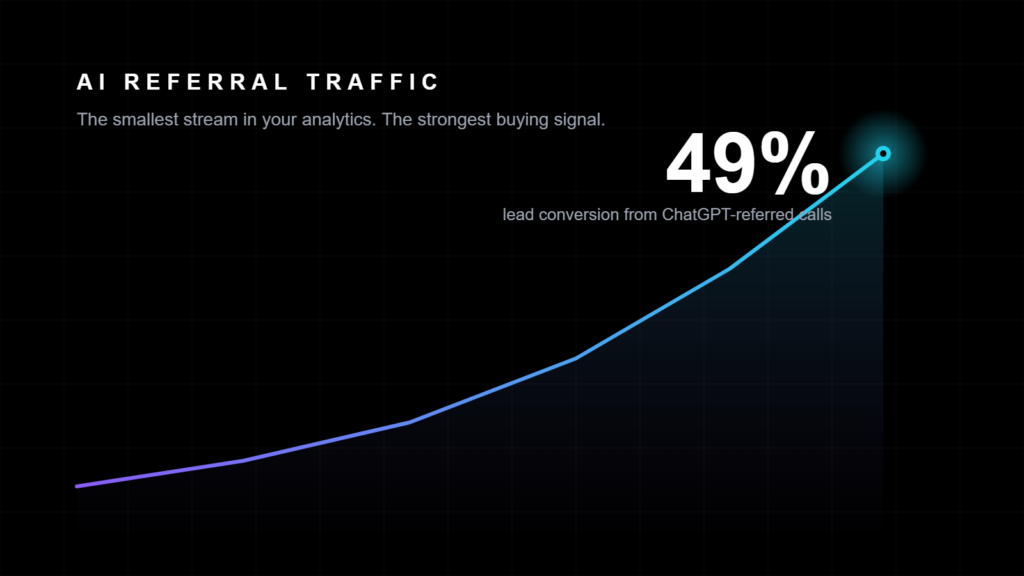
AI referral traffic is the most valuable visitor stream most marketing teams have never measured. These visitors asked ChatGPT, Perplexity, or Gemini a question, then clicked through to your site. The volume looks tiny inside your analytics. However, the conversion data tells a very different story.
For the past year, smart brands have fought for visibility inside AI answers. Now the second half of that equation matters just as much: what happens after the click. In fact, new research shows that AI-referred visitors convert better than any other traffic source on the web. Here is what the data says, and how to capture the value before your competitors notice it.
The Numbers: A Small Stream With Outsized Value
Similarweb recently traced what happens after a brand appears in an AI answer. Users who saw a ChatGPT recommendation were about 2.5x more likely to visit that brand’s site within seven days. Moreover, the halo extends beyond the click itself. Brands cited in AI answers also saw measurable lifts in branded search, so the influence shows up in channels you already trust.
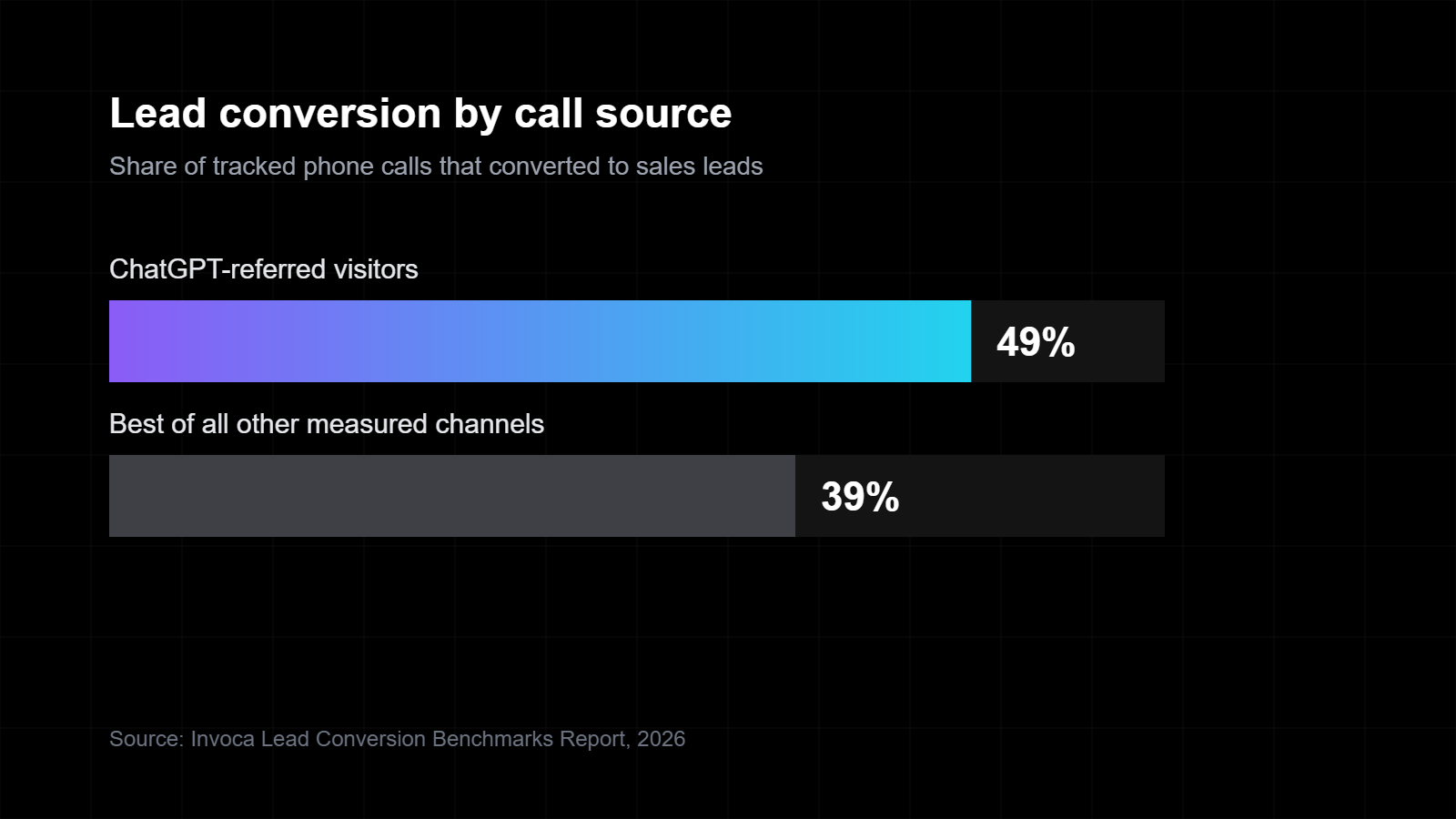
Conversion is where things get remarkable. Invoca analyzed calls across its network and found that phone calls from ChatGPT-referred visitors converted to sales leads at 49%. That result beat every other measured channel by roughly ten percentage points. Consequently, the smallest line in your referral report may hold your densest concentration of real buyers.
The backdrop makes this shift urgent. Zero-click AI answers keep compressing traditional referral volume across the web. Meanwhile, AI referral traffic, the clicks that do escape the answer box, arrives more decisive than anything organic search ever sent.
Why AI Referral Traffic Converts So Well
Consider what happens before the click. The visitor already asked a detailed question, compared alternatives, and read a synthesized recommendation with your brand in it. Therefore, they arrive pre-qualified and pre-sold. The AI assistant ran the top of your funnel for you.
Traditional search sends browsers; AI assistants send decision-makers. For example, someone who asks Perplexity for the best exhibit partner for a 20×30 island booth and then clicks your link is not researching casually. Instead, they are shortlisting. AI referral traffic behaves like a warm introduction from a trusted colleague, because functionally that is exactly what it is.
How to Measure AI Referral Traffic in GA4
Most analytics setups bury these visits under generic “Referral” or, worse, “Direct.” Fixing that takes less than an hour. First, create a custom channel group in GA4 and add a channel for AI sources. Then, match sessions where the source contains any of the major assistant domains:
- chatgpt.com and chat.openai.com
- perplexity.ai
- gemini.google.com
- copilot.microsoft.com
- claude.ai
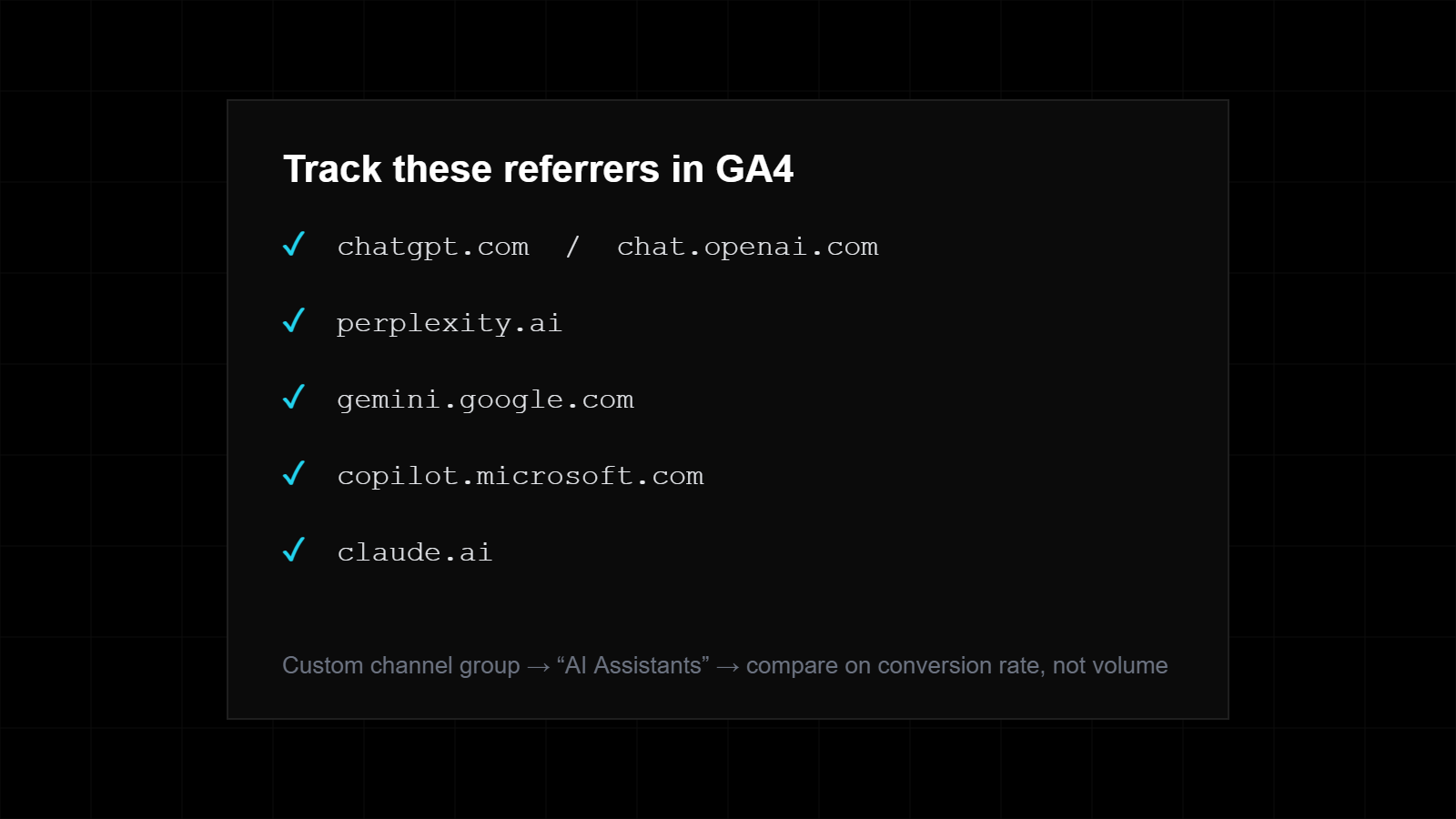
Additionally, build one comparison report before anything else: AI-referred sessions versus organic sessions, measured on conversion rate rather than volume. The percentage of total traffic will look small. However, the value per session usually is not, and executives fund channels they can see.
Watch for Dark AI Traffic
Not every AI-driven visit carries a referrer. Many users read an answer, then type your brand name into a browser later. As a result, part of your “Direct” and branded-search growth is really AI influence in disguise. Furthermore, assistant apps and in-app browsers strip referrer data unpredictably. Track branded search volume alongside AI referrals, because the two rise together.
Design Landing Pages for the Post-Answer Visitor
AI-referred visitors skip your homepage journey entirely. They arrive mid-conversation, holding a specific recommendation, and they want confirmation fast. Therefore, the pages they land on should lead with proof: outcomes, pricing clarity, credentials, and one direct next step. Answer-first pages that resolve the visitor’s question in the opening paragraph do double duty. They win AI citations, and they convert the humans those citations send.
Additionally, audit the pages assistants actually cite. Ask ChatGPT and Perplexity the questions your buyers ask, note which of your URLs they link, and treat those URLs as high-intent landing pages. Most brands polish their ad landing pages obsessively while their most-cited resource page still leads with a two-year-old case study.
Turning AI Referral Traffic Into Pipeline
Measurement is step one; monetization is step two. Speed matters most here. These visitors sit late in the funnel, so route their form fills and calls to the front of the queue. Additionally, give every AI-cited page a low-friction conversion path: a call link, a short form, or a booking calendar instead of a generic contact page. If phone calls drive your business, call tracking will connect AI referrals to closed revenue.
Finally, close the loop with visibility. The size of your AI referral stream depends directly on how often assistants cite you. We covered that playbook in our guide to AI search visibility in 2026, and our free AI Visibility Checker will show you how your most important pages score today.
The Bottom Line for 2026 Budgets
AI referral traffic will not replace organic search volume this year. However, it is already delivering the best-qualified visitors many brands receive, and almost nobody measures it properly. The brands that instrument this channel now will know exactly where their highest-converting buyers come from, while competitors keep crediting “Direct.”
Karma Group helps brands win AI visibility and convert the traffic it sends. If you want a clear picture of your AI referral pipeline, book a 30-minute discovery call and we will walk through your data together.

Written by
Founder and CEO, Karma Group
Brendan Cogbill is the founder and CEO of Karma Group. He has run paid media and search for trade show, experiential and industrial brands since 2019, and now focuses on how brands earn visibility inside AI search. He holds a BBA and an MBA from Grand Canyon University and works from Phoenix, Arizona.
More about Brendan Cogbill