
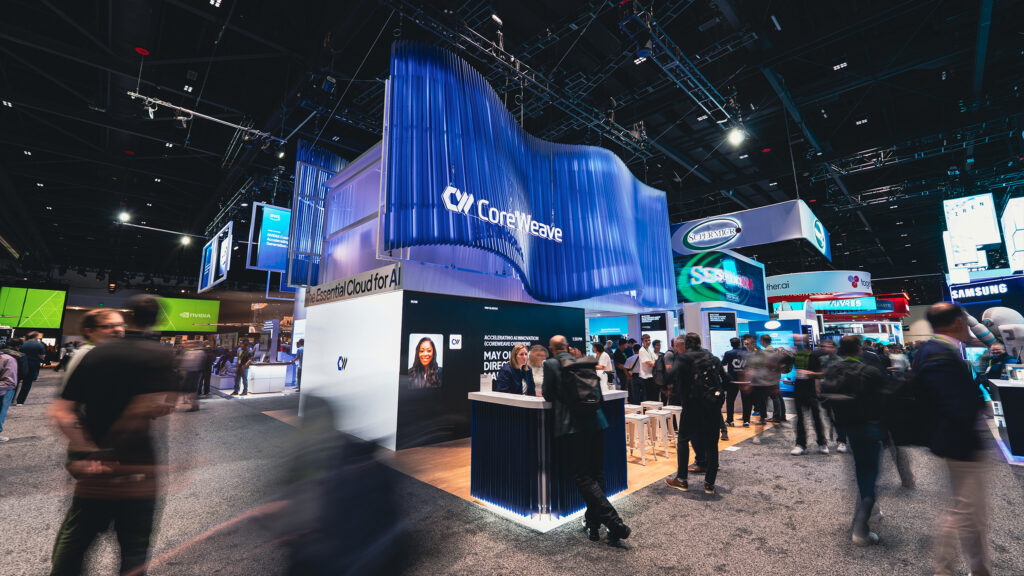
The frame you’ll be using in your next pitch deck — the one that gets clicked on, the one your sales team puts in every proposal — is decided not in pre-production, not in the edit, but in the 30 minutes between the booth being built and your first guest arriving. This is the playbook we run with brands and exhibit builders so the shoot day delivers the assets that matter.
Most teams plan trade show production around the show itself. They scope for the hours when the floor is open and visitors are walking the aisles. That framing produces what we call “recap photography” — competent coverage of an active booth that mostly works as social fodder for the week after the event. It’s also why most trade show photography looks the same: a wide booth establishing shot, a few people pointing at things, a token close-up of the brand mark.
The better framing is to plan around the moments that produce hero assets, which mostly happen outside show hours. The install window, the early-morning quiet, the executive walkthrough between meetings, the wrap-out frame at the end of day three — these are the assets that earn their place in your website hero for years. This playbook is structured around those moments.
Before the show floor opens
Install window
The most underrated frame opportunity at any trade show is the install. The booth at 3 AM with the lights coming up, the team standing back, the brand mark sharp before a single visitor walks in — that’s the hero shot. It’s also the most controlled environment your photographer will have all week, with no crowds, no harsh competing lighting from neighboring booths still being built, and unlimited time for composition.
Always plan for the photographer to be on-site during install closeout, even if “official” coverage starts on show day one. The install closeout shots usually become the most-used assets in the final delivery because they’re the only frames in the whole shoot where the booth is at its sharpest, before crowds, foot traffic, and wear-and-tear take their toll. The Bounty Super Bowl coverage was built on install-night hero stills — the booth at its most composed, before kickoff.
Lighting check
Trade show floors are notoriously bad lighting environments. Overhead spots, color-mismatched LEDs, fluorescent washes from neighboring booths, daylight bleeding in from convention center skylights. A good photographer will walk the booth before opening and identify the angles that work, the angles that don’t, and what kind of supplemental lighting (if any) the booth needs. Most issues are fixable with a couple of fill panels strategically placed where they won’t distract from visitors but will save the frame from looking like a fluorescent-washed nightmare.
If you’ve built the booth yourself or with an exhibit partner like the teams we partner with on production, this is the moment to flag any lighting issues to the build team. They can usually adjust spot positions, swap out a problematic gel, or move a screen to a less reflective angle. The fix is cheap before the show opens; expensive after.
Talent prep
Anyone who’s going to be in front of the camera needs to know when they’re being shot, where to stand, what they’re wearing (clean version of the brand polo, not the wrinkled spare from yesterday), and whether they’re meant to be working or posing. The single biggest waste of shoot time at trade shows is talent who don’t know they’re talent yet. Get a shot list to every camera-eligible person 24 hours before doors open, and assign someone on your team to be the talent wrangler — the person whose job is making sure the right people are in the right place at the scheduled time.
On the show floor
Camera roles
A good two-person team has clear roles: one runs the booth interior + product detail, the other runs walkways + brand moments + talent. Two photographers covering the same booth from the same angles is wasted coverage and usually a sign that pre-production wasn’t done. Coverage plans should be explicit, and the brief should specify which photographer is responsible for which deliverable categories so there’s no overlap.
The “no camera” rule
Adjust the team’s posture before the show opens. The moment a member of your team sees a camera, they freeze, smile, and ruin the candid. A pre-show note to staff (“we’re shooting for the full day, ignore the camera, work like normal”) buys you the natural moments that make a brand film feel real instead of stock. The strongest trade show footage isn’t of people posing — it’s of people working, talking to customers, demonstrating the product, and looking like they belong there.
Walk-up windows
Every trade show has rhythms. The first hour is light traffic. Mid-morning is a flood. After lunch is a lull. Afternoon picks back up. Plan high-priority shots (executive walkthroughs, talent demos, product unveilings) around traffic patterns so the visual story matches the moment. A demo with five people standing around it is better content than a demo with no one. Show the team where the energy is — that’s what makes the footage feel alive when edited.
Detail captures
Brand mark, finish detail, edge work, screen content, surface texture, lighting design — these become the social cuts and gallery sets later. Allocate at least an hour for detail coverage when the floor is quiet (typically early morning or end of show day). Detail captures are also what feeds the 12-month content distribution plan — they’re the b-roll your social team will be pulling from six months from now.
The b-roll problem
Most trade show video footage is unusable. The reason: people shoot wide handheld pans of the booth, expecting it to be edit-worthy. It rarely is. What edits well is short, controlled shots — 5-second tripod-locked frames, gimbal walks that start and end on a brand moment, slow detail pulls that hold long enough to land in a cut. Wide handheld coverage is the b-roll equivalent of someone telling you a story in a single 5-minute monologue: technically it contains the information, but nothing’s actually usable in the form it arrived.
Brief your video team to think in clips, not coverage. Hand them a deliverable spec: “We need 15 usable 5-second clips and 5 medium-form (15–30 second) interview cuts.” That changes what they shoot. It also changes what they bring to the floor — a videographer who’s told “shoot b-roll” brings a single camera and roams; a videographer who’s told “deliver 20 specific clips” brings a tripod, a gimbal, an audio setup, and a shot list.
Talent + executive moments
If your CEO is on the floor for 90 minutes, you have ~30 minutes of usable camera time once you account for walking, meetings, bathroom breaks, and the inevitable conversation with the competitor that started as a quick hello and is now its eighth minute. Don’t waste that 30 minutes on speeches no one will watch the back of. Use it for:
- Walkthrough of the install with your exhibit partner (great content for both teams — your sales and theirs)
- Demo of one specific product feature (the one your sales team will lean on for the next quarter)
- Candid interview by your booth (b-roll for the recap film, sound bites for paid social)
Two-eyes rule
For any moment that involves talent + product, have someone other than the photographer watching. The photographer is composing — they won’t catch a stained tie, a misaligned product card, or a sponsor logo that’s blocked by a stray person walking through the frame. A second pair of eyes catches the things you don’t want to discover in the edit when there’s no going back. We bring a PM to talent moments on every multi-day shoot for exactly this reason; it’s a small line item that prevents the kind of post-event regret that’s expensive to fix.
End of show day
Wrap shots
Before the booth tear-down, take 10 minutes. Booth from across the aisle with foot traffic in motion blur. Detail shots of any new product cards or graphics that have aged in the day’s wear and tear. The booth lights coming down. The team packing up. These are the “we made it through day one” frames that often anchor recap films and become the emotional bookends in brand storytelling. They’re also the moments most production teams skip because they’re tired and ready to leave.
Selects review
A good production team will send same-day or next-day selects so you can flag anything that needs a re-shoot on day two or three. If you don’t see selects until the post-event delivery, you’ve lost your chance to re-capture anything that didn’t land. We send selects within 48 hours of wrap on every engagement — that’s part of every photo and video shoot we run, not a premium add-on.
Post-show
File handoff
Every file should be delivered cloud-organized: heroes, gallery, social cuts, raws (if requested), b-roll. With clear naming conventions. The “here’s a Dropbox link with 4,000 files” approach is what makes you not use the content later — your team can’t find anything when they need it, sales can’t search the library, and the asset ends up wasted because friction killed the workflow.
Re-use plan
A trade show shoot should produce content for the next 6–12 months of campaigns, not just the recap email. Plan the re-use before the shoot: social calendar, sales deck slides, website refreshes, pitch materials. A team that understands re-use plans differently than one that doesn’t — the deliverable specs change, the shot lists change, the way coverage gets organized changes. Here’s how to actually extract 12 months of content from a 4-day shoot.
Owner check
Make sure every asset comes with full usage rights, in writing, with no expiration. Owning the files outright is non-negotiable — if a quote doesn’t include it, walk. The “12-month exclusive usage” language that some agencies sneak into contracts is the same thing as renting a portfolio; you’ll be renegotiating in a year and paying the same fees twice.
What it costs
Curious about the budget side of all this? Here’s a breakdown of what trade show production actually costs in 2026, with concrete examples at $10k and $30k scopes.
The brands that get the most out of trade show production aren’t the ones with the biggest budgets. They’re the ones who plan the shoot day like the asset matters — because it does. Long after the trade show ends, the photos and video are the only thing left that lives.
Tell us about your upcoming activation and we’ll send a 48-hour quote with a shoot day plan attached.